
Aws Pricing Explained A Simple Guide
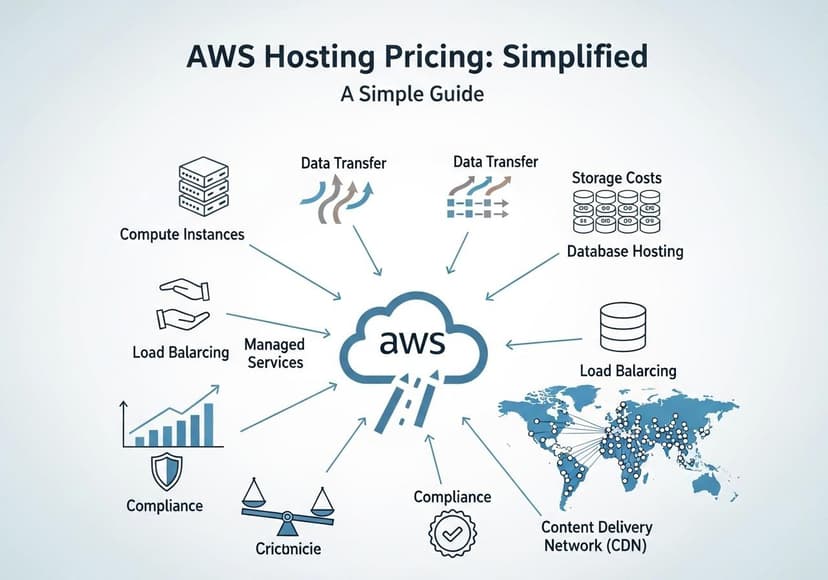
AWS hosting expenses involve pay-as-you-go. Services, regions, and usage patterns determine the costs.
If you’re venturing into the world of cloud computing, chances are you’ve heard of AWS (Amazon Web Services). It's like the Swiss Army knife of the tech world, offering everything from virtual servers to database hosting. But with so many options available, understanding AWS pricing can seem daunting. Fret not! In this simple guide, we will break down the key components of AWS pricing, so you can make well-informed decisions about your cloud services.
Understanding AWS Hosting
AWS hosting is primarily based on a pay-as-you-go model, which means you only pay for what you use. This model is beneficial because it allows you to scale your usage up or down as needed. AWS offers various services, from hosting a single website to managing a complex infrastructure with load balancing. With such flexibility, you can start small and grow your infrastructure as your needs evolve.
For instance, if you require virtual servers, AWS EC2 (Elastic Compute Cloud) is the go-to choice. It provides compute instances that can run various applications. Just remember, the more instances you run or the higher the performance specs you choose, the more you’ll need to budget for compute costs. So be sure to evaluate your needs carefully!
Data Transfer Costs
One component of AWS pricing that often catches people off guard is data transfer. While data transferred into AWS is typically free, data transferred out can incur charges. These costs can add up, especially if you have a high-traffic website. The pricing structure varies based on how much data you are transferring. It’s prudent to keep an eye on your data transfer usage as you build your services.
Storage Costs Explained
When it comes to cloud storage, AWS offers various options, including S3 (Simple Storage Service), EFS (Elastic File System), and Glacier for archival storage. Each option has its unique pricing structure based on factors like frequency of access and redundancy. Regularly accessing data stored in S3 could be more costly in the long run compared to using Glacier for infrequently accessed data. Understanding your storage needs will help you estimate the storage costs accurately.
Compute Instances: How Do They Work?
Compute instances are the backbone of nearly all AWS services. Depending on what you need, you can choose different types of instances tailored for various workloads. AWS offers options optimized for general-purpose computing, memory-optimized workloads, accelerated computing, and more. Each of these has distinct pricing models, and your choice will impact both performance and costs significantly.
A great tool to help you calculate the costs associated with compute instances and other AWS services is the AWS Pricing Calculator. It allows you to estimate expenses based on your usage scenarios.
Database Hosting and Its Pricing
If you're looking to host databases on AWS, you will find multiple options such as RDS (Relational Database Service) and DynamoDB. Each of these services comes with its pricing mechanism. For example, RDS allows you to choose various database engines, instance types, and storage options that can significantly influence costs.
Moreover, you may want to factor in potential additional costs like backups and data transfer when budgeting for database hosting. Understanding these aspects helps ensure compliance with your budgeting requirements.
Managed Services: Buyer’s Guide
Management and maintenance of cloud services can be overwhelming. However, AWS offers managed services that eliminate the heavy lifting involved in running a reliable cloud environment. Services like AWS Lambda can automate your workflows and allow you to respond to events without managing servers. While these services are usually billed on a pay-as-you-go basis, they can sometimes come at a premium compared to self-managed solutions.
When considering managed services, analyze whether the additional cost is justified by the time you'll save and the decrease in potential errors in your setup. This could lead to better compliance and governance for your corporate needs.
Load Balancing Basics
If you're scaling your applications, load balancing becomes essential. AWS provides various services like Elastic Load Balancing (ELB) to distribute incoming traffic across multiple targets, ensuring that your applications are resilient and can handle unexpected spikes in traffic.
The pricing for load balancing includes fees based on the number of Load Balancer-hours and the amount of data processed. Keeping these costs in mind is crucial when planning your architecture and could potentially affect your overall compliance with budgeting and resource management.
Content Delivery Network (CDN) and its Costs
Another important aspect of AWS cloud computing is using a Content Delivery Network (CDN) through AWS CloudFront. A CDN can significantly speed up the delivery of your content worldwide, making your users’ experience better. However, you’ll need to budget for data transfer costs and requests made across the network, which can vary based on your CDP region.
Keep these extra costs in mind when you look at your overall AWS spending. For more detailed information on these services, you can visit AWS's official site.
Security Services and Compliance
Last but not least, security services play a pivotal role in your AWS setup. Tools that help secure your data and manage compliance with laws and standards are essential, especially if you’re handling sensitive data. Services such as AWS Identity and Access Management (IAM) and AWS Shield for DDoS protection are crucial for maintaining a high level of security and compliance.
The costs of these services can vary, but ensure that they align with your compliance requirements. Investing in them can save you from consequential fines down the line and protect your resources effectively. Ultimately, compliance is not a feature you want to overlook when budgeting for AWS services.
Conclusion
Understanding AWS pricing doesn’t have to be a complicated affair. With careful planning and utilizing the right tools, you can effectively manage your AWS costs while benefiting from all the great services it provides. From compute instances to security services, being aware of all these facets will help you build a robust cloud environment that meets your needs while maintaining compliance. Always remember, the key to great cloud computing is being informed, so dive deep into each service and its pricing model!
Related Posts

11 States Offering Free Solar Panels
Homeowners in eleven states can now get free solar panels, reducing energy costs and promoting sustainability.
Asset Maintenance Management
Asset inventory tools streamline tracking, improving equipment lifecycle oversight and enhancing maintenance planning for optimized resource allocation.

Boosting Employee Engagement With Evaluation Software
The software improves employee performance through feedback, goal tracking, and development, ultimately enhancing workplace satisfaction and productivity.