
Securing Apis Best Practices
Implement robust authentication, authorization, and encryption protocols for secure API communications and data protection.
Understanding API Security
APIs are crucial for enabling applications to communicate and share data. However, they also represent significant security vulnerabilities if not adequately protected. API security aims to prevent unauthorized access to your data and resources. This includes protecting user data and ensuring that only legitimate requests are processed. As organizations increasingly rely on APIs, developing robust security practices is a must. To read more about application security, check out IBM's guide.
Authentication and Authorization
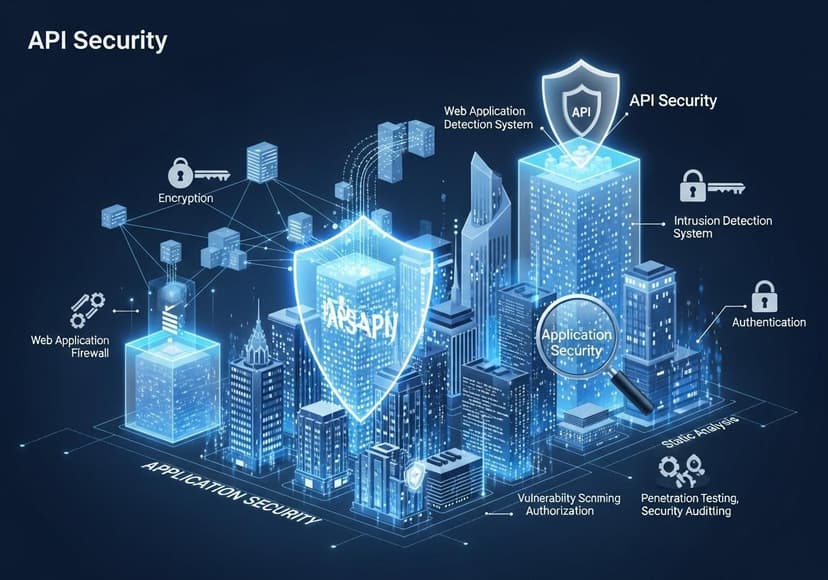
Two of the most essential components of API security are authentication and authorization. Authentication verifies the identity of a user or service attempting to access the API. Common methods include OAuth, JSON Web Tokens (JWT), and API keys. Once authenticated, authorization determines what data and operations the user can access. It’s vital to implement strong authentication processes to ensure that only valid users can interact with your API.
Implementing Encryption
Encryption is a fundamental aspect of securing APIs. Utilizing HTTPS to encrypt data in transit protects it from eavesdropping and man-in-the-middle attacks. Additionally, sensitive information stored within databases should also be encrypted, ensuring that even if a breach occurs, the data remains unreadable without the proper keys. Always make encryption a priority in your API security strategy.
Employing a Web Application Firewall (WAF)
A Web Application Firewall can be a vital part of your API security strategy. WAFs can filter, monitor, and block malicious traffic to web applications by analyzing HTTP requests and applying rules. These systems can help mitigate a variety of threats including SQL injection, Cross-Site Scripting (XSS), and other common attack vectors. Investing in a solid WAF can save you from potential data breaches and unauthorized access.
Establishing an Intrusion Detection System (IDS)
An Intrusion Detection System continuously monitors network or system activities for malicious activities or policy violations. When it detects potential threats, the IDS can alert your security team, allowing for a prompt response to any suspicious behavior. Pairing an IDS with a WAF can provide double-layer protection, enhancing your overall API security posture.
Conducting Threat Modeling
Threat modeling is an essential process that allows you to identify and prioritize potential security threats to your API. By understanding the various attack methods that could be employed against your API, you can take proactive measures to address them. This involves enumerating the critical assets, understanding potential attackers and their capabilities, and establishing a plan to mitigate identified risks effectively.
Regular Vulnerability Scanning
Vulnerability scanning involves using automated tools to identify weaknesses within your API. Regular scans can detect issues like outdated libraries or known vulnerabilities that could be exploited by attackers. If security issues are identified, it's crucial to address them promptly. By scheduling regular scans, you'll maintain a clearer view of your API's security health over time.
Penetration Testing
Another best practice is the implementation of penetration testing. This involves simulating attacks on your API to identify vulnerabilities that might not be apparent through regular testing methods. By discovering and addressing issues identified during penetration tests, you can substantially reduce the risk of a successful attack. More information on application security can be found at Broadcom's security page.
Security Auditing
Regular security auditing ensures that your API remains compliant with industry standards and regulations. It involves reviewing access logs, configuration settings, and the implementation of security measures to ensure they are up to date and effective. Proper auditing can help you identify potential loopholes and reinforce your API's security framework.
Static and Dynamic Analysis
To maintain robust API security, incorporating both static and dynamic analysis is essential. Static analysis involves reviewing your codebase before the API is deployed, identifying potential vulnerabilities in the source code. Dynamic analysis, on the other hand, examines the API in a running state, looking for security lapses during operation. Utilizing both methods allows you to catch a broader range of vulnerabilities, ensuring more comprehensive coverage.
Conclusion: The Ongoing Journey of API Security
Securing APIs is an ongoing process that requires constant vigilance and adaptation. As technology evolves, so do the techniques employed by malicious actors. By implementing the best practices outlined in this blog, you can significantly enhance your API security posture. Stay informed, keep testing, and prioritize your security measures. For more insights on application security, don't hesitate to explore Application Security's resources.
Thank you for reading our blog on securing APIs. We hope you found this information valuable!
Related Posts

20 Cloud Security Services You Should Consider
Protecting cloud infrastructure is crucial. Explore essential security services, encompassing data, threat detection, and compliance.

Cloud Security Posture Management Tools You Should Know
Assess and improve your cloud security. Enhance compliance and detect misconfigurations for robust protection.

Cost Savings The Financial Benefits Of Cybersecurity Software
Cybersecurity software protects assets, minimizes breaches, ensuring business continuity, and reducing financial losses effectively.