
Data Management Systems A Comprehensive Guide
It covers databases, storage, processing, and analysis, providing a complete understanding of data management.
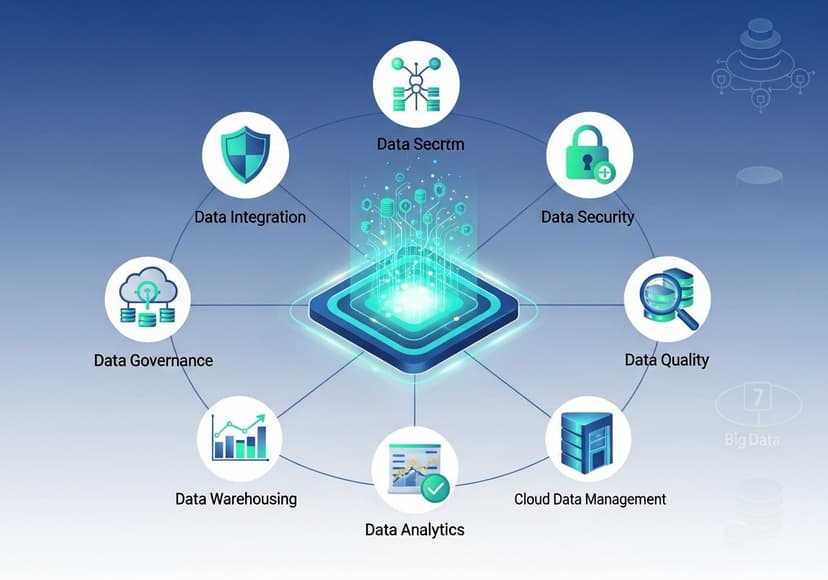
In today's fast-paced business environment, Data Management Systems (DMS) have become the backbone for organizations aiming to leverage data for decision-making. With data being hailed as the new oil, understanding various aspects of data management is crucial. This guide will explore the critical components of DMS that contribute to business intelligence, including Data Governance, Data Integration, and Data Security.
What are Data Management Systems?
Data Management Systems refer to integrated frameworks designed to manage, store, and analyze data efficiently. These systems help organizations utilize large volumes of data, enabling better decision-making and improved operations. A good DMS not only pertains to managing databases, but it also encompasses Data Quality, Data Integrity, and Data Governance, thus making it essential for effective Business Intelligence.
Database Management is the foundation of any DMS. It involves managing databases that store critical business data. A well-structured database allows organizations to retrieve and analyze data efficiently, which ultimately leads to enhanced Business Intelligence. Tools like Oracle Database provide robust capabilities for managing large-scale databases, making it easier for businesses to maintain data integrity while facilitating effective data management.
Understanding Data Governance
Data Governance is essential for maintaining the accuracy and reliability of data. It involves the establishment of policies, procedures, and standards to manage data effectively. With the rising importance of data in decision-making, organizations are prioritizing Data Governance to ensure that data managers adhere to regulations and standards. Companies can leverage robust data governance frameworks to foster trust in their data, which is a significant component of Business Intelligence.
Data Integration is a crucial aspect of DMS that involves combining data from different sources to provide a unified view. Organizations often have data scattered across various departments and systems. Effective Data Integration helps break down these silos, enabling a comprehensive analysis that enhances Business Intelligence. By employing data integration tools, businesses can streamline processes, improve data accessibility, and empower cross-functional teams to make informed decisions.
The Significance of Data Warehousing
Data Warehousing refers to the storage of integrated data from multiple sources. It serves as the central repository for an organization's historical and current data, making it easier for data analysts to access and analyze information. A well-structured data warehouse improves Data Quality and ensures that businesses can derive valuable insights from their data assets. When combined with analytics tools, a data warehouse plays a significant role in fostering Business Intelligence initiatives.
As organizations increasingly rely on data, ensuring Data Security is more critical than ever. Data breaches can severely impact a business’s reputation and operations. Implementing robust data security measures, including encryption and access controls, is essential for protecting sensitive information. A strong focus on Data Security not only safeguards organizational data but also builds customer trust, further enhancing Business Intelligence capabilities.
Exploring Data Analytics
Data Analytics plays a pivotal role in extracting insights from raw data. By utilizing analytics tools and techniques, organizations can make sense of complex datasets, identifying trends and patterns that drive strategic decisions. Whether predictive, descriptive, or prescriptive, data analytics frameworks greatly enhance Business Intelligence, enabling organizations to respond proactively to market changes and customer needs.
Cloud Data Management solutions offer flexibility and scalability, making them a popular choice among organizations of all sizes. By moving data management processes to the cloud, businesses can streamline workflows while reducing operational costs. Cloud solutions are particularly beneficial for managing Big Data Management, allowing organizations to harness the power of large datasets. Through cloud platforms, companies can also enhance their Data Security measures, ensuring compliance with regulations and standards.
Master Data Management: The Backbone of DMS
Master Data Management (MDM) focuses on creating a single, accurate view of an organization's critical data entities. By centralizing master data, organizations can reduce redundancy and discrepancies, leading to improved Data Quality. Effective MDM ensures that all departments work with the same data, which is vital for enhancing Business Intelligence capabilities. Well-curated master data serves as a reliable foundation for analytics and reporting.
Data Quality directly affects the reliability of insights generated through data analysis. Poor-quality data can lead to erroneous conclusions and misguided business strategies. Organizations must implement data quality measures, such as regular audits, validation checks, and cleansing processes, to ensure their data remains accurate and relevant. Maintaining high Data Quality is essential for effective Business Intelligence, as it enhances trust in data-driven insights.
Utilizing Big Data Management
Big Data Management involves managing and analyzing vast amounts of data generated from various sources. Today's organizations must harness big data to remain competitive and responsive to customer needs. Through effective big data management, businesses can identify trends, enhance operational efficiency, and improve customer experiences. Utilizing cutting-edge analytics techniques, organizations can turn big data into actionable insights, further boosting their Business Intelligence capabilities.
In summary, navigating the complex landscape of Data Management Systems is essential for today's businesses. From Data Governance to integrating data from various sources, understanding how to manage data effectively can significantly enhance Business Intelligence. For further insights on data management and related topics, check out this guide on data management systems or explore resources that contribute to wildlife conservation efforts through data management in ecosystems at this link.
Related Posts

10 Foods To Lower Your A1C
Incorporating specific foods, like those rich in fiber, can significantly help manage and decrease A1C levels effectively.

20 Article Titles For Isn Certification For Contractors
Contractors' ISNetworld certification ensures safety, compliance, and qualification, mitigating risks, and promoting worksite excellence and reliability.

20 Article Titles For Isn Certification For Contractors
ISNetworld certification ensures contractor compliance, promoting safety and reducing risks across diverse projects and industries.